


Food and Beverage Traceability and Supply Chain Care
Leveraging RFID and RTLS to enable real-time inventory visibility, frictionless shopping, and data-driven efficiency across modern retail environments.
The Future of RFID and RTLS in Grovery Retail

Seamless Supply Chain Integration
RFID and RTLS enable real-time tracking from production to store shelves, improving delivery speed, reducing spoilage, and helping grocers meet demand with greater accuracy.

Intelligent Inventory Management
RFID, RTLS, and sensor-based tracking provide real-time visibility into stock levels, freshness, and expiration dates, reducing overstocking and spoilage while supporting sustainability initiatives.

Frictionless Shopping Experiences
RFID enables cashier-less shopping by automatically scanning items at exit, while RTLS guides customers to products in-store, creating faster and more convenient shopping journeys.

Omnichannel
Fulfillment
RFID and RTLS support accurate, real-time inventory visibility to enable reliable online order fulfillment, ensuring fresh, complete orders for delivery and curbside pickup.

Advanced Analytics & Personalization
RFID and RTLS data enable grocers to analyze purchasing patterns, optimize product placement, and deliver personalized promotions that drive smarter decisions and stronger customer loyalty.

Challenges and Accelerated Adoption
Although initial implementation costs remain a challenge, declining hardware prices and clear ROI are accelerating RFID and RTLS adoption as grocers compete on efficiency and customer experience.
Services
Key Benefits of RFID & RTLS in Grocery and Retail

Frictionless Shopping Experiences
The global RFID market is expected to grow from $15B in 2023 to $25B by 2028, with retail and grocery as major contributors. In parallel, the RTLS market is projected to reach $10B by 2028, growing at a 24% CAGR, driven by logistics and retail adoption. This growth reflects increasing demand for real-time visibility, automation, and data-driven operations across modern supply chains.
Adoption Rate in Grocery Retail
RFID adoption among large grocery retailers is expected to reach 50–60% by 2028, driven by inventory accuracy and supply chain visibility, while RTLS adoption is projected at 25–30%, focusing on asset tracking and customer flow optimization. As implementation costs decline and omnichannel demands grow, adoption is expected to accelerate across mid-sized retailers as well.


Efficiency Gains
RFID improves inventory accuracy to over 95%, significantly reducing stock discrepancies and overstocking costs. Real-time tracking of perishables cuts food waste by 20–30% through better monitoring of shelf life and expiration dates. These gains lead to lower operational costs, improved product availability, and more sustainable grocery operations.
Revenue and Cost Impact
RFID and RTLS can drive 3–5% revenue growth by improving product availability and customer satisfaction. At the same time, automation enabled by these technologies can reduce inventory management and checkout costs by 10–20%, improving overall operational efficiency.


Customer Experience Metrics
RFID-enabled checkout solutions can reduce average checkout times by 50–70%, significantly improving shopping convenience. For online grocery orders, RFID and RTLS help achieve up to 98% order accuracy, strengthening customer trust and retention.
Sustainability Metrics
Improved supply chain efficiency and reduced food waste enabled by RFID can lower the carbon footprint of grocery operations by 10–15%. These capabilities support retailer sustainability goals by helping reduce emissions, minimize waste, and promote more responsible operations.

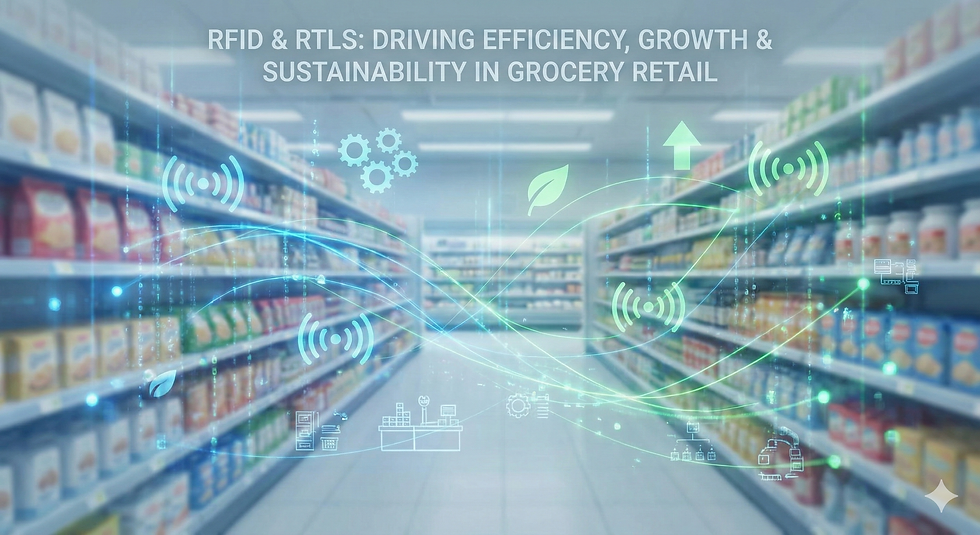
The Future of Grocery & Retail Operations
Leveraging RFID and RTLS to enable real-time inventory visibility, frictionless shopping, and data-driven efficiency across modern retail environments.


Market Growth Metrics
RFID market growth is supported by forecasts from leading research firms, while RTLS projections are driven by industry-wide adoption trends analyzed across logistics and retail sectors.
Adoption Rates
Industry reports from organizations such as NRF and Capgemini highlight growing adoption of RFID and RTLS in retail, supported by case studies from leading grocers tracking technology-driven transformation.
Efficiency Gains
Industry studies and retailer case studies, including findings from Deloitte, McKinsey, and implementations such as Walmart’s RFID programs, demonstrate measurable improvements in inventory accuracy and significant reductions in waste.


Revenue and
Cost Impact
Analyses from firms such as Boston Consulting Group (BCG) and Forrester highlight the financial benefits of RFID and IoT adoption in retail. In addition, industry white papers from technology providers outline measurable cost savings and revenue improvements.
Customer Experience Metrics
Studies by Accenture and PwC highlight measurable customer experience gains from RFID and RTLS in retail. Real-world implementations such as Amazon Go demonstrate reduced checkout times and improved order fulfillment accuracy.
Sustainability
Metrics
Insights from World Economic Forum reports and retailer case studies, including initiatives by Tesco and Carrefour, highlight RFID’s role in reducing food waste and lowering the carbon footprint of retail operations.